
Strategic orientations
Strong core, ambitious transition.
Petrol Group's 2030 Strategy
Strong core, ambitious transition.
The Petrol Group is entering the new strategic period with a clear ambition: to preserve a strong and profitable core business while simultaneously accelerating the expansion of geographic and product footprint to ensure diversified and stable cash flows and long-term growth.
Vision
“Together we grow faster than our competition. We are the largest energy company in the region and provide energy, which is the source of life.”
Mission
“We connect energy, people, and technology into smart solutions that power communities, enable mobility, and build trust for a better life.”
Strategic Directions by 2030
Due to the increasing external pressures on the core business, the following will be key in order to ensure long-term growth:
- Maintaining and strengthening stable cash flows from the core business,
- Accelerating selective and disciplined diversification,
- Enhancing the resilience of the business model and regional competitiveness.
Key Business Goals by 2030
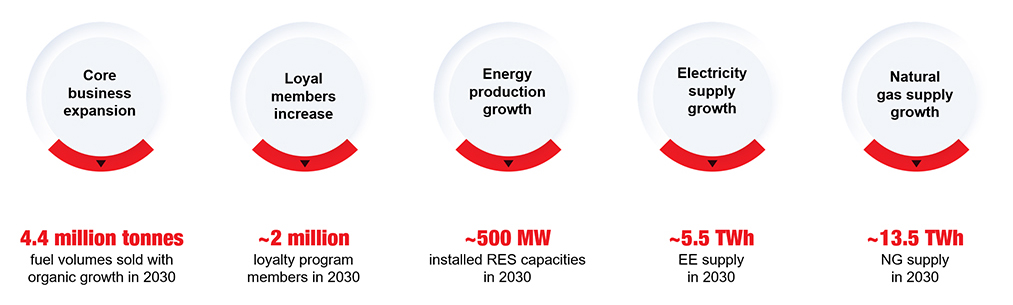
By 2030, we will expand our core business and strengthen energy production and supply to achieve diversified and stable cash flows.
Key Financial Goals by 2030
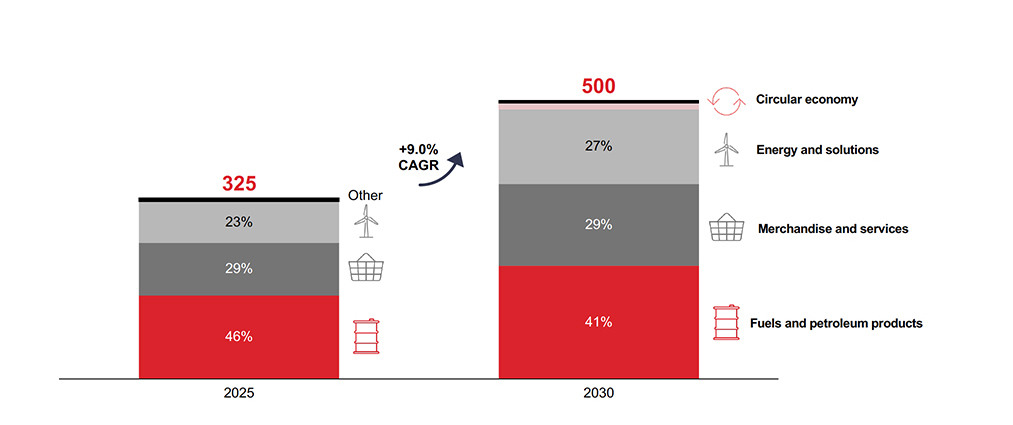
The strategy envisages 9% EBITDA CAGR in 2026–2030, exceeding the growth recorded over the past five years; it combines strong organic and inorganic growth across all key pillars, including a new one – circular economy.
Our financial goals by 2030:
- EBITDA in excess of EUR 500 million in 2030,
- Net profit of EUR 300 million in 2030,
- To gradually increase the share of profit allocated for dividends to 60%,
- Average annual CAPEX of EUR ~150 million,
- Target net debt/EBITDA below 1.0,
- Target project ROACE above 10%
Business Growth Pillars
Fuels and petroleum products
We maintain and expand the core business through geographic expansion, retail network modernisation, supply chain optimisation, and by ensuring reliable and competitive supply of fuels and petroleum products in key markets.
Merchandise and services
We create an excellent stop-on-the-go customer experience at our service stations. We ensure komfort and time savings for our customers through a carefully selected range of products and services.
Energy and solutions
We accelerate growth in electricity and natural gas supply and increase renewable energy generation.
Circular economy
We are establishing a new growth pillar through the development of circular business models that facilitate reducing environmental impacts and enhancing the resilience of our operations.
Sustainability Goals and Commitments
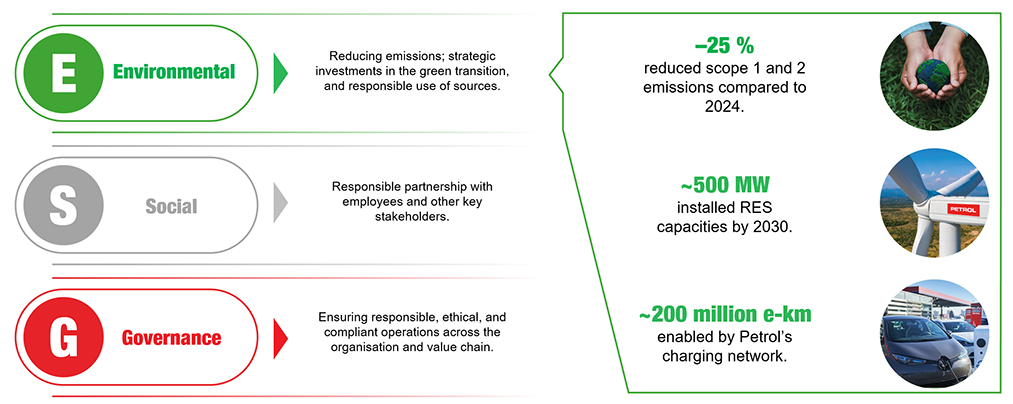
Petrol is accelerating the fulfilment of its sustainability commitments with clear environmental, social, and governance objectives.
From Strategy to Results
Strategy execution is based on:
- Operational excellence and cost efficiency (including digitalisation, automation, and advanced technologies),
- Organisational and HR development,
- Strengthening the brand and delivering a superior customer experience.
Document Download
Any further use of data, estimates, or content from the document „Petrol Group‘s 2030 Strategy“ – including summarizing, quoting, interpreting, or incorporating into other analyses – requires prior written consent from Petrol d.d., Ljubljana, to ensure accurate and comprehensive interpretation.
This document contains an estimate of the current state, including an evaluation of key business indicators for 2025, as well as Projections for 2026–2030 and beyond (forward-looking statements) related to the Petrol Group’s strategy, plans, goals, and expectations.
In developing the strategic plan, we relied on the rolling forecast for 2025, which changed significantly during the year due to unforeseen circumstances. In cases of material deviations between the rolling forecast and the latest estimate for 2025, we adjusted the baseline in this document to align with the latest available estimate. The assumptions for 2025 in this document are estimates and may differ from actual results, as the financial year was not yet closed at the time of content preparation.
Projections include risks and uncertainties which is why actual results may differ materially from those stated due to movements in energy prices, market conditions, changes in demand, macroeconomic factors, technology development, regulatory changes, competitive environment, and other factors disclosed in our public reports.
Certain data are based on estimates, assumptions, and third-party information. Despite due diligence, we cannot guarantee their completeness or accuracy.
These risk factors explicitly apply to all projections included in this content and must be considered by the reader. Each projection is valid only as of the date of this content. The Petrol Group does not undertake to publicly update or revise any projection due to new information, future events, or other circumstances, except as required by regulations. Given these risks, actual results may differ materially from those stated, implied, or inferred in this content.